Table of Contents
To protect your plumbing from heavy rain and flooding, prepare your drainage before storms arrive, watch for early signs of sewer trouble while it rains, and contact a licensed plumber if water comes back up into your home.
Heavy rain can overload drains and sewer lines, especially in older homes. Slow drains, gurgling toilets, and sewer smells are warning signs, and acting early helps prevent water damage. Heavy rainfall and flash flooding can put sudden pressure on drains and sewer lines.
When a storm backs up your drains or floods a room, you need a licensed plumber you can reach at any hour. A Plus Priority Plumbing has served homes and businesses across Greater Atlanta for over 16 years, and every technician is licensed and insured.
If you live in Powder Springs, our 24×7 plumbing Powder Springs service gives you a way to get help at any time, and our Powder Springs emergency plumbers are available to help when heavy rain causes an urgent problem. We offer free phone estimates, and every job comes with a one-year warranty and a 100% satisfaction guarantee.
What Happens to Your Plumbing When It Rains Heavily?
Rain does not stay on the surface. It soaks into the ground and flows into storm drains and sewer lines around your home. When the soil is saturated, extra water has fewer places to go, and the pressure can reach your drains, your sewer line, and the fixtures on the lowest level of the house.
A home can have no visible leak and still develop drain trouble after a storm. If grease, tree roots, or debris partly block a sewer line, it may not have room for additional water. Extra stormwater can add pressure to drains and sewer lines, making an existing restriction easier to notice.
The signs are usually small at first. You may notice a slow drain, a bubbling toilet, water rising in a floor drain, a sewer odor, or damp ground near an outdoor cleanout. A single sign may not be an emergency, but if it happens during every storm, the line needs to be checked.
These are common plumbing problems after heavy rain, especially when drainage systems are already partly restricted.
How Can You Reduce Runoff Around Your Home?
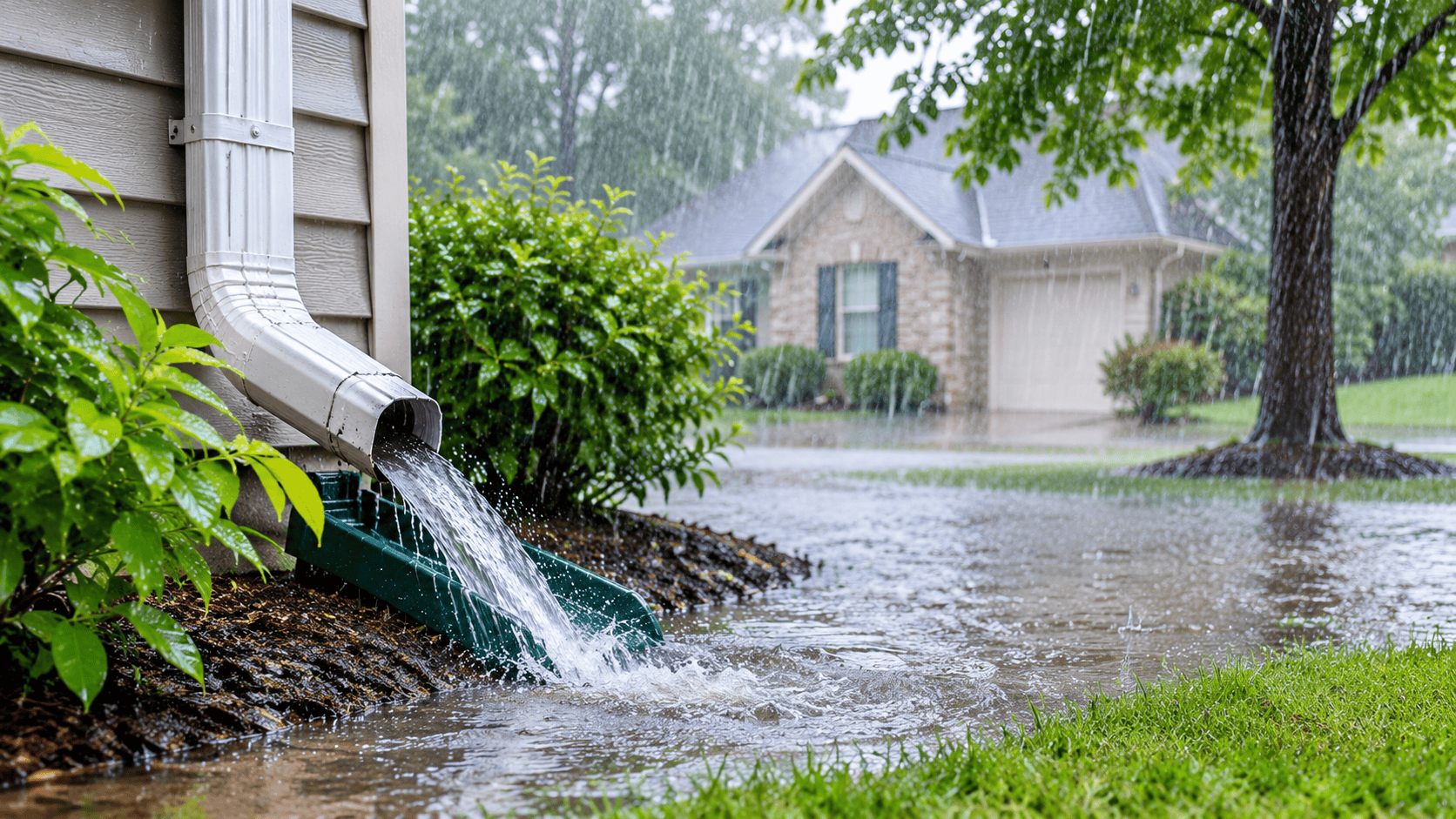
When less water collects near the foundation, your drain lines carry less strain. Walk around your yard during and after a heavy rain and note where water pools, where it drains slowly, and which areas stay wet long after the storm has passed. A walk around your yard after it is safe to go outside can show you drainage patterns that are hard to see on a dry day. Managing stormwater runoff around your home can reduce the amount of water collecting near your foundation.
Pooling near the foundation, a patio, or an outdoor cleanout usually means that area needs better drainage. Clear gutters, downspouts, and outdoor drains allow water to move away from the house.
What Should You Check Outside Before a Storm?
- Gutters and downspouts. If they are blocked, water can run down exterior walls and collect at the foundation.
- Downspout direction. Water should flow to a safe spot, away from basement walls and sewer cleanouts.
- Outdoor drains. Remove leaves and debris so water does not collect in the wrong place.
- Wet areas that do not dry. Ground that stays soaked for days may point to a drainage or sewer problem.
- Sewer cleanouts. Keep the area around them clear, because a plumber needs quick access if a storm causes a backup.
These steps do not replace professional sewer service, but they reduce unnecessary strain on your drainage system.
Why Do Several Drains Back Up at the Same Time?
If more than one drain backs up together, the cause is probably not a single fixture. A clog in the kitchen sink usually stays there. A problem in the main drain or sewer line can reach toilets, showers, tubs, and floor drains throughout the home.
Heavy rain makes the issue easier to notice because stormwater increases the amount of water in the system. A toilet may gurgle while the washing machine drains, or a basement drain may rise while a shower runs slowly. These signs mean the system cannot carry the full flow.
If such a situation happens, stop adding water. Do not run the dishwasher, the washing machine, or several showers at once. Let the system settle, and call a plumber if the problem continues.
How Can You Prevent Sewer Backups During Heavy Rain?
The best time to prevent a backup is before the rain begins. A line with roots, grease, or debris may
work on normal days and fail when a storm adds more water. Having your drains or sewer line cleaned before storm season can reduce that risk. Keeping grease, wipes, and food scraps out of your drains throughout the year also limits buildup.
These simple plumbing flood prevention tips can reduce the chance of a backup during the next storm.
If you have had a backup before, write down the date, the drains involved, and how long the problem lasted. A plumber can use these notes to tell whether the cause is a blockage, a damaged line, or drainage around the property.
Take extra care if your property has large trees, an older sewer line, or drains that were slow before. Roots grow toward moisture inside sewer lines, and heavy rain can make an existing blockage much easier to notice.
Which Warning Signs Should You Not Put Off?
- Water coming up through a basement or utility room floor drain
- More than one toilet bubbling or draining slowly
- A sewage smell during or after rain
- Water standing around an outdoor cleanout
- Drains that are still slow after the storm is over
If you notice any of these, avoid chemical drain cleaners and use less water until the system is inspected. Chemical cleaners may not reach the source of a main-line problem and can create additional hazards if wastewater is backing up. A licensed plumber can find the cause and handle it safely.
Which Fixtures Need the Most Attention During a Storm?
The first signs of storm-related plumbing trouble often appear in bathrooms, laundry areas, and basements. A toilet may gurgle, a shower may drain slowly, or a floor drain may smell or hold water. Because these fixtures often share drain lines, trouble in one can spread to others.
The kitchen also needs attention. Grease and food waste collect in kitchen drains over time and reduce the space for water to move during a storm. Keep grease out of the sink, particularly before heavy rain.
A gurgling or slow-flushing toilet can mean a problem in the main drain or sewer. A basement floor drain with rising water or odors is often reacting to stormwater pressure. A shower or tub that drains slower in rain may share a restricted drain. A kitchen sink that slows down often has grease buildup. Water pooling or overflowing at an outdoor cleanout can point to a sewer or drainage problem.
Checking these spots before and after storms helps you catch trouble before it turns into a backup indoors.
What Should You Do Right After a Storm?
Once the rain ends, check your drains before you return to normal water use. Run water briefly in every sink, flush each toilet, and see how fast the water goes down. Listen for gurgling, bubbling, or other unusual sounds.
Look at basement drains, outdoor cleanouts, and any places where water gathered. If the water go
es down but the sewer smell stays, or a drain is still slower than normal, do not assume it will correct itself.
Schedule a plumbing inspection if drains stay slow, stains appear on walls or floors, or the same problem returns after each Heavy rain can overload drains and sewer lines. Learn simple steps to prevent a backup, the early warning signs, and when to call a licensed plumber fast.storm. Having it checked early can keep a small issue from becoming a large repair.
When Does a Storm-Related Plumbing Problem Become an Emergency?
It is an emergency when sewage enters your home, water rises in a floor drain, several drains stop working together, or wastewater appears in a tub, shower, or toilet. Sewage backups can create health risks, and standing water can damage floors, walls, and belongings
Call for emergency help if the water keeps rising after you reduce water use, if the sewage smell becomes strong, or if water is near electrical outlets or appliances. Stay out of standing water near electrical equipment. If sewage has entered the house, keep children and pets out of the area and avoid touching the water or affected surfaces with bare hands.
Do not try to force a blocked drain open, and do not remove a sewer cleanout cap on your own. A licensed plumber has the equipment and training to deal with wastewater and find where the problem starts.
If several nearby homes appear to have the same issue, contact your local sewer utility for guidance as well. It also helps to take photos of any damage and check your homeowner’s policy, since coverage for sewer backup differs from one policy to another.
How Can You Stay Prepared for Heavy Rain and Flooding?
Being prepared does not take a complicated plan. Check your outdoor drainage before storm season, avoid putting too much water through your drains during heavy rain, and inspect important fixtures after each major storm. If the same problem returns, schedule professional service rather than waiting for the next storm.
A simple routine supports plumbing protection during storms without requiring major work. Small actions done on a regular basis can prevent bigger repairs. Homeowners who understand how water moves on their property are in a better position when a storm arrives.
Who Can Help Protect Your Plumbing From Heavy Rain and Flooding in Powder Springs?
Heavy rain and flooding can strain your home’s plumbing. Preparing early and acting quickly can lower the risk of backups and water damage. Keep drainage areas clear, limit water use during storms, and arrange an inspection if your drains still struggle after rain.
If you live in Powder Springs or nearby parts of Greater Atlanta, A Plus Priority Plumbing can help with drain, sewer, and emergency plumbing problems caused by storms. Our team provides 24/7 service, licensed and insured technicians, free phone estimates, and a one-year warranty on jobs. If heavy rain has left you with slow drains, sewer smells, or water backing up in your home, Call A Plus Priority Plumbing at 470-440-9680 for trusted local help.
Heavy rain can add pressure to a drain or sewer line, especially if it is partly restricted. That pressure can cause air to move through the line and create gurgling.
It can. Saturated ground and shifting soil can put pressure on buried sewer lines
Not if your drains are slow or gurgling. A dishwasher releases a lot of water at once, which adds strain. Wait until the storm is over.
Stop using water and keep everyone away from the area. Stay away from electrical items near standing water. Call a licensed plumber immediately.
Clear gutters, downspouts, and outdoor drains, and direct water away from the foundation. Keep grease and wipes out of drains. After each storm, check drains and cleanouts.