Table of Contents
What Causes a Water Heater to Leak From the Top?
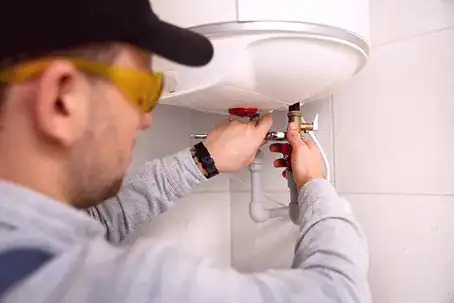
Most leaks at the top start at the cold-water inlet, the hot-water outlet or the temperature and pressure relief valve. These connections handle water entering and leaving the tank, so even a slightly loose fitting can allow the liquid to run down the outside of the unit. The temperature and pressure relief valve is a safety feature. It releases water when pressure or temperature inside the tank gets too high. Occasional discharge can happen during operation, but if you see repeated dripping or a constant flow, call a plumber. Never block or remove this valve. It helps protect the tank from dangerous pressure buildup. A plumber can determine whether the valve needs replacement or whether the real issue is water pressure.Why Is Water Pooling Around Water Heater Equipment?
Not all of the water necessarily comes from the tank. A nearby pipe, a loose fitting, or a drain pan that has filled can send water across the floor. Finding the first wet point helps before any conclusion about the tank. Look at these common leak points:- Top connections: Cold-water inlet, hot-water outlet, or threaded fittings
- Relief valve: The valve or discharge pipe on the side or top of the unit
- Drain valve: The small valve near the bottom of the tank
- Tank base: Corrosion, a failed seam, or water seeping from the tank body
- Surrounding area: Condensation, a nearby pipe, or a blocked drain pan
Is Water Heater Condensation the Same as a Leak?
No. Water heater condensation is moisture that gathers on the outside of the tank when cold water fills it in a warm, humid room. A long shower, a laundry load, or a dishwasher cycle can trigger it. It tends to spread as a thin, even layer over the tank. A leak is more likely to appear as a steady drip from one valve, fitting, or point along the tank. To check, dry the tank and floor, place dry towels around the base, and inspect them later. If the towels remain dry but water appears again from a valve or the bottom of the heater, schedule a professional inspection.Why Is Your Water Heater Tank Leaking at the Bottom?
A water heater tank leaking from the bottom can point to the drain valve or the tank itself. The drain valve is there to flush sediment out of the tank. With age, its seal can wear out, causing a slow drip or a steady leak. If the leak comes from the drain valve, a plumber may be able to replace it. If water is seeping from the tank body or collecting beneath the unit with no visible valve leak, the inner tank may be corroded. Internal tank damage cannot usually be repaired from the outside. Once rust or corrosion creates a leak in the tank wall, replacement is often the more dependable option.What Are Common Water Heater Problems That Lead to Leaks?
Several common water heater problems can develop before water appears on the floor. Paying attention to early changes can help you avoid a sudden failure.- Sediment buildup: Minerals collect at the bottom of the tank and can affect heating performance.
- Rust and corrosion: Internal rust can weaken the tank over time.
- Worn drain valve: An aging valve may no longer seal properly.
- High water pressure: Extra pressure can strain valves and fittings.
- Loose connections: Fittings at the top of the heater can loosen with age.
- Old tank age: Older heaters are more likely to develop internal leaks.
What Should You Do Before the Plumber Arrives?
If you can safely reach the controls, turn off the power or gas supply first, then shut off the water supply to the heater. This stops the unit from heating while it may be leaking and reduces the amount of water entering the tank. For an electric heater, switch off its dedicated breaker. For a gas heater, turn the gas control to the off position. If you smell gas, leave the home immediately and call your gas utility from outside. Next, close the cold-water supply valve on the pipe entering the top of the tank. If it will not close, use the main water shutoff valve. Move belongings away from the water and dry the area if it is safe to do so. Avoid trying to repair a gas connection, remove the relief valve, or open the tank yourself. These parts can involve hot water, pressure, electricity, or gas.When Is Hot Water Heater Leak Repair Enough?
Repairing a hot water heater leak may be enough when the leak comes from a fitting, drain valve, or pressure-relief valve. These parts can sometimes be tightened, sealed, or replaced without replacing the entire heater. A plumber should confirm the source first. Replacing a valve without checking water pressure may not resolve the problem. If pressure is too high, the new valve can develop the same issue. If the tank itself is leaking, repair is usually not a lasting solution. A plumber can assess the heater’s age and condition and help you decide whether repair or replacement makes more sense.How Can You Prevent Future Water Heater Leaks?
Check around the base every few months for dampness, rust stains, mineral deposits, or a drain pan that keeps filling. If your heater is making noise, producing rusty water, or struggling to keep up with hot-water demand, our article on water heater repair services explains the signs that should not be ignored. Set the temperature no higher than needed, since high settings add strain to valves and fittings. If your home has had water-pressure concerns, ask a plumber to check the system. For an aging heater, schedule an inspection for corrosion, sediment, valve wear, and pressure issues before water damages the floor.Who Can Help With a Water Heater Leaking in Greater Atlanta?
A water heater leaking problem should be checked by a licensed plumber if water keeps coming back, the relief valve releases water again and again, or you think the tank is failing. A professional can locate the source and say whether repair or replacement makes more sense. A Plus Priority Plumbing offers water heater repair, replacement, and installation service for both tankless and tank-type water heaters throughout the Greater Atlanta area. Our team has served local homeowners and businesses for more than 16 years and offers free phone estimates and a one-year warranty on all jobs.Get Trusted Help for Your Water Heater Leaking Today
If you notice water pooling around water heater equipment, a steady drip, or signs of internal tank damage, turn off the power or gas supply and the cold-water valve if it is safe to do so. Then call a licensed plumber before the leak spreads. A Plus Priority Plumbing is available 24/7 across Greater Atlanta, including Powder Springs. Call 470-440-9680 for a free phone estimate and dependable help with your water heater leaking issue.Heavy hot-water use refills the tank with cold water. In a humid room, the cold surface collects moisture that drips down and resembles a leak. The temperature change may also make a weak fitting release more water. If water keeps returning from one point, a professional should look at it.
Yes. A slow drip can keep flooring damp, affect nearby walls, and allow mold to develop. It may also signal a pressure or valve problem that worsens. Shutting off the power or gas and the cold-water valve reduces the water entering the tank.
Not always. When the drain valve is the source, replacing it may solve the problem. When water seeps from the tank body, the inner tank may be corroded, and replacement is often the more reliable option because corrosion inside the tank cannot be sealed from the outside.
Dry the drain valve and the base of the tank, then check again after a short time. If water is showing at the valve, it means the valve is leaking. A tank issue is more likely if water comes from the tank body with no wet valve or fitting above it.